



Who is SP-API development for?
Amazon brands and sellers whose team repeats Seller Central work by hand, and businesses that serve sellers: agencies, 3PLs and prep centers (see the Pacific Prep build) and software teams building a seller tool.
We build custom SP-API software that wires your orders, inventory, pricing, ads, reports, FBA and finance into one dashboard you own — replacing the stack of SaaS tools you pay for today.
We build on
Ecomsellertool builds custom software on Amazon’s Selling Partner API (SP-API) and Ads API for brands, agencies, 3PLs and software teams, and has done so since 2017. Each build starts with a written plan that names the scope, the timeline and a fixed price before any work begins. You keep your accounts, your data and the custom code we build; the Growth OS base is licensed to you.
Amazon brands and sellers whose team repeats Seller Central work by hand, and businesses that serve sellers: agencies, 3PLs and prep centers (see the Pacific Prep build) and software teams building a seller tool.
Three kinds of project: a single integration (orders, reports, feeds or FBA inventory into a system you already use), a dashboard that joins several SP-API areas with your other channels, or a full multi-marketplace platform such as Ecom Global. The twelve areas below are the usual building blocks.
The timeline is written into the plan before work starts. It depends on how many SP-API areas and marketplaces connect, the data volume, and, for an app other sellers will authorize, Amazon’s own developer review. Our registration guide covers that step.
Each build gets a fixed price in the written plan, before any work begins. Support after launch is optional and monthly. The SP-API development cost guide lists the typical ranges by project type, and what moves a price up or down.
A new SP-API integration should start on the current versions below, and an older tool should be checked against the dates in the middle column: Amazon says calls to a removed resource fail from the removal date. Every row comes from Amazon’s SP-API deprecation schedule and the linked API guides, checked October 23, 2026.
| Area | Older version or item | Deprecated / removed | Use instead |
|---|---|---|---|
| Orders | Orders v0: getOrders, getOrder, getOrderItems, buyer-info and address calls | Jan 28, 2026 / Mar 27, 2027 | Orders v2026-01-01: searchOrders and getOrder with includedData; personal data through roles, no Restricted Data Token |
| Order events | ORDER_STATUS_CHANGE notification | Jun 21, 2023 / Jul 29, 2026 (removed) | ORDER_CHANGE, which also covers buyer-requested cancellations |
| FBA inbound | Fulfillment Inbound v0 plan and shipment calls (createInboundShipmentPlan, createInboundShipment, transport calls) | Apr 1, 2024 / Jan 21, 2025 (removed) | Fulfillment Inbound v2024-03-20 (createInboundPlan); v0 getLabels and getBillOfLading stay in use |
| Finance | Finances v0: listFinancialEvents and the by-group and by-order calls | Jul 21, 2025 / Aug 27, 2027 | Finances v2024-06-19 (listTransactions) |
| Settlement reports | GET_V2_SETTLEMENT_REPORT_DATA_FLAT_FILE and _XML | Mar 17, 2025 / Nov 11, 2026 | GET_V2_SETTLEMENT_REPORT_DATA_FLAT_FILE_V2 (charges in amount-type, amount-description and amount columns) |
| Listings feeds | XML and flat-file listings feeds such as POST_PRODUCT_DATA and POST_INVENTORY_AVAILABILITY_DATA | Mar 18, 2024 / Dec 3, 2025 (removed) | JSON_LISTINGS_FEED or the Listings Items API |
The settlement report change lands first, on November 11, 2026, so a finance or reconciliation tool that still reads the old settlement files needs work this quarter (our payouts recipe lists what to change). If you run a tool built before 2026 and are not sure which calls it makes, send it as a project brief: we list the calls that hit a removed or deprecated version and quote the migration as a fixed price.
SP-API is Amazon’s official REST interface for sellers and vendors. Most of the work a team repeats in Seller Central — pulling reports, updating listings, creating shipments, adjusting prices, answering buyers — has an API route through it.
We have built on Amazon’s seller APIs since 2017 and shipped 50+ tools on them.
Twelve SP-API resource areas cover the routine work an operations team repeats by hand: orders, listings, inventory, reports and more. Pick the ones you need and we wire them into one dashboard, with the decisions left to your team.
Three blueprints we build on. Each takes a routine off someone’s desk.
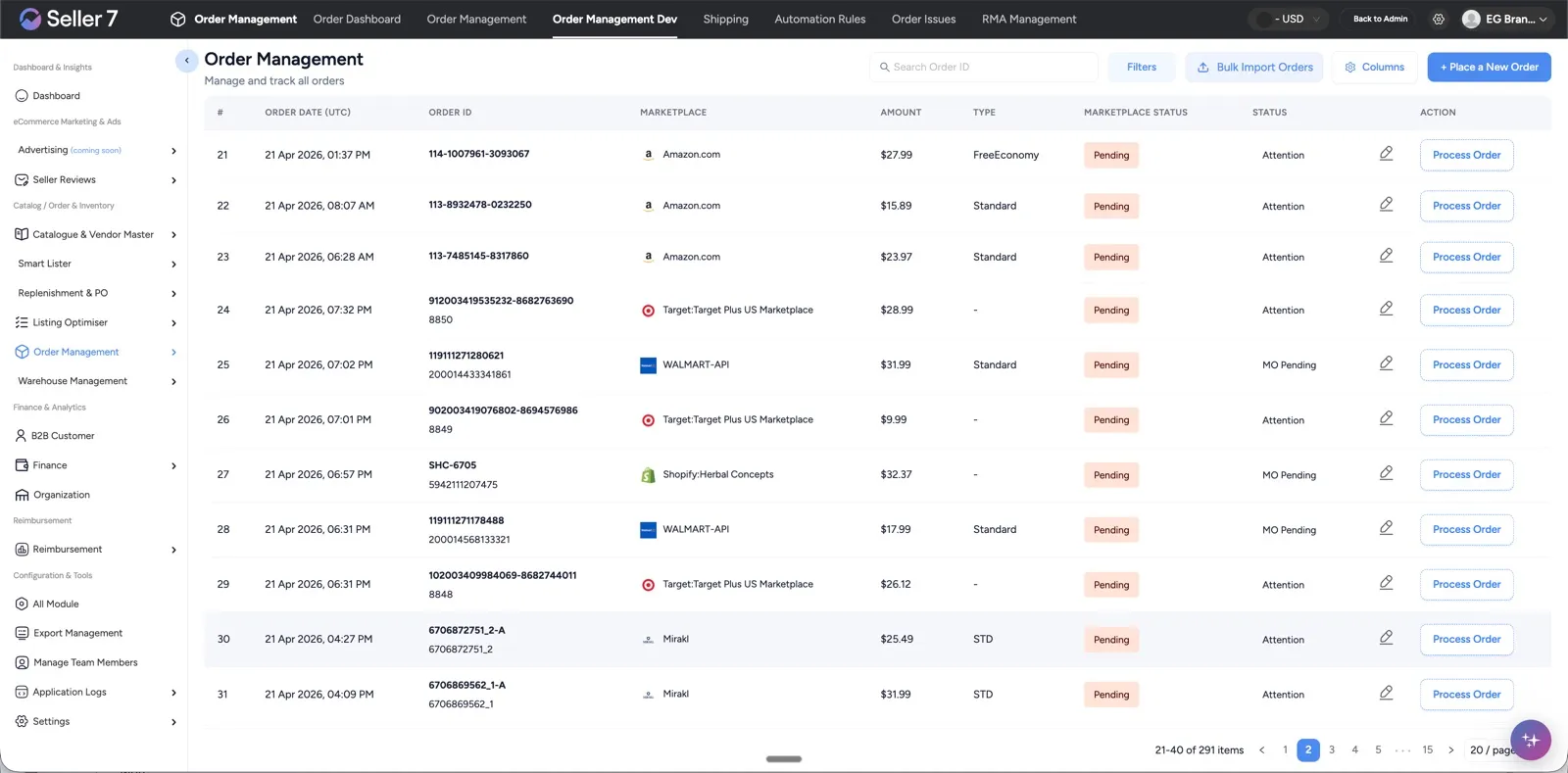 Seller7
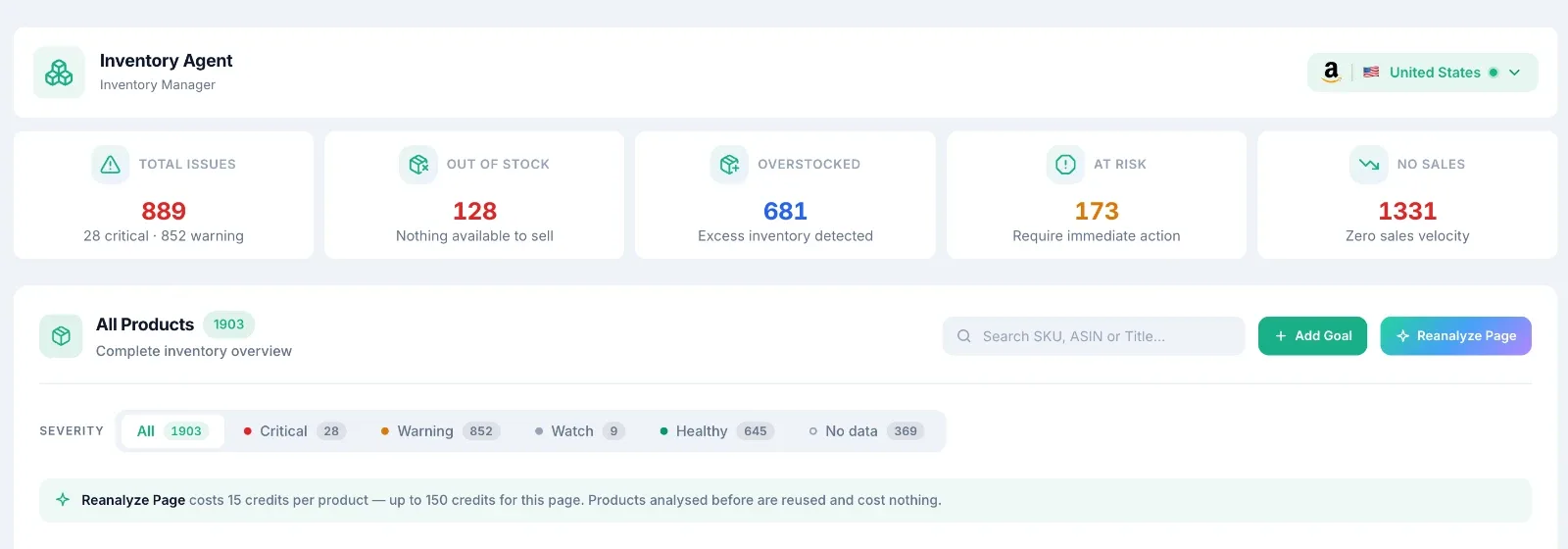 Growth OS · inventory agent
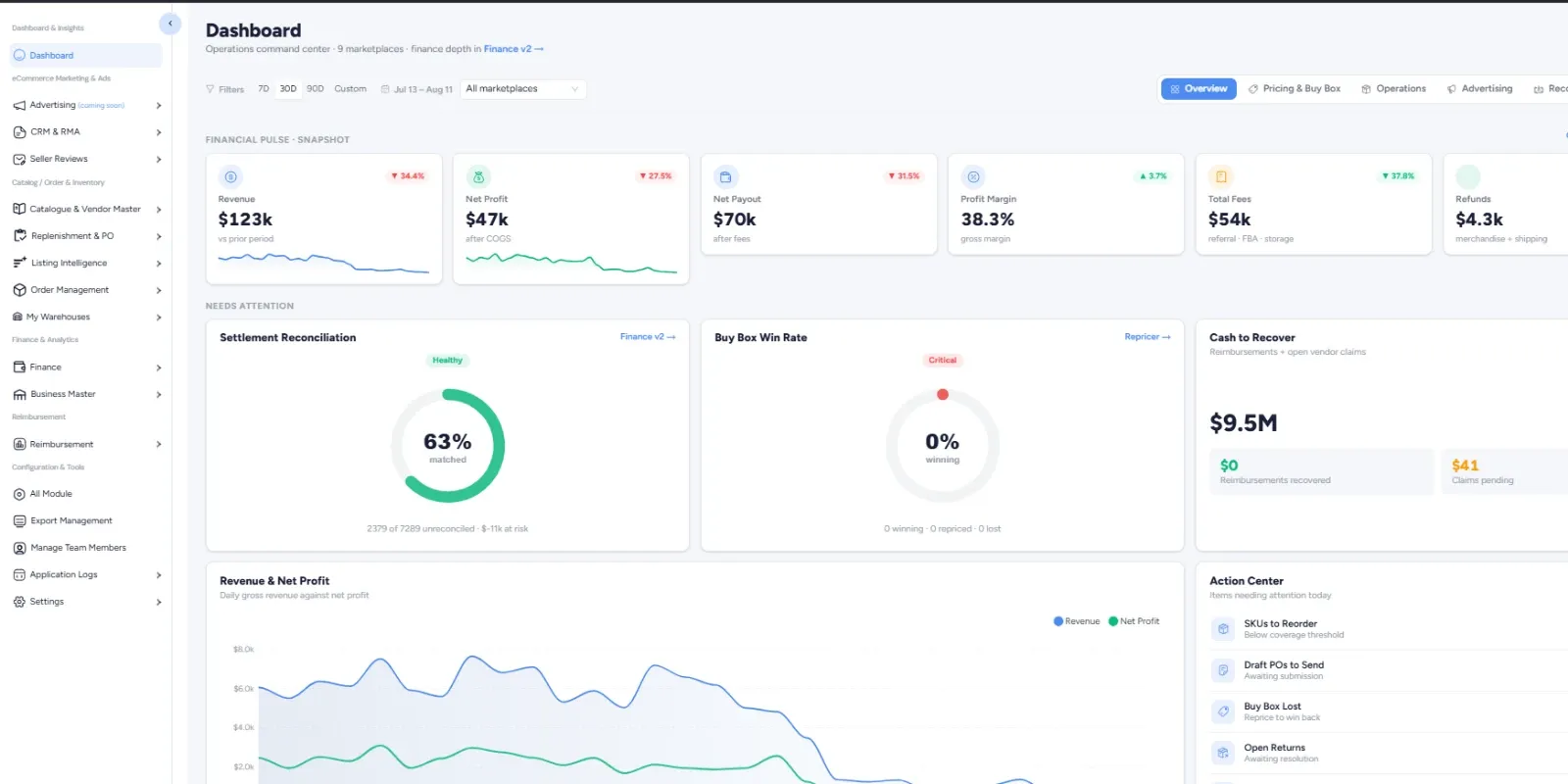 Growth OS
Every pill below is a live module we’ve shipped on the SP-API. Combine them into the tool your business actually needs.
100+ teams run on software we built, including












You’ll know the architecture, the price and the timeline before we write a line of code. Weekly Friday demos, staging access, and a clean hand-off at the end.
Describe the workflow you want automated. We reply with a written plan: scope, timeline and a fixed price.
Short, honest answers — the same ones we give on a discovery call. Don’t see your question? Ask us directly.
Most of the routine work your team repeats in Seller Central. Concretely:
MWS (Marketplace Web Service) was Amazon’s older, XML-based seller API. Amazon’s current developer documentation covers the SP-API: a REST API with OAuth authorization per seller, per-operation usage plans, event notifications delivered to Amazon SQS or EventBridge, and APIs MWS never had, such as Solicitations for review requests. If you still run a tool built on MWS-era code, we audit it and rebuild it on the current SP-API models.
Yes. We build on the Amazon Advertising API (Sponsored Products, Brands, Display — reports, campaign CRUD, bidding, targeting) and the Product Advertising API for affiliate/catalog use-cases. We stitch SP-API, Ads API and marketplace APIs (Walmart, eBay, Shopify, TikTok Shop) into a single dashboard when you need it.
Yes, until March 27, 2027. Amazon deprecated the v0 order operations (getOrders, getOrder, getOrderItems and the buyer-info and address calls) on January 28, 2026 and lists that removal date in its deprecation schedule. The replacement is Orders API v2026-01-01: searchOrders and getOrder with an includedData parameter, and personal data through roles instead of Restricted Data Tokens (Amazon’s migration guide). Any order sync written before 2026 needs this change.
Not at the moment. Amazon had planned an annual fee and usage fees for third-party SP-API developers, then wrote that it “will not move forward with the SP-API usage and annual fees at this time” (Amazon’s notice, checked October 23, 2026). What a build costs is the development and hosting, covered in the cost guide.
Send a project brief and a person replies within 2 business days with a written plan: scope, timeline and a fixed price. A single integration is the shortest kind of build; a multi-marketplace platform the longest (typical ranges are in the cost guide). You get weekly Friday demos on your staging and optional monthly support after launch.

30-minute fit call. No pitch deck. We map your SaaS spend, your marketplace footprint and the custom Seller tool we could ship to replace it, with a fixed price and a go-live date.
Free · 30 minutes · Pick any open slot