Custom AI agents that run your Amazon and marketplace operations
An AI operations agent watches your marketplace, ad and inventory data, does routine work within the rules you approve, and sends purchase orders, budget changes and unusual cases back to your team with the evidence. We build and deploy these agents on your own Amazon, Walmart, TikTok Shop and Shopify accounts. Each page below says which steps follow fixed rules and which use an AI model.
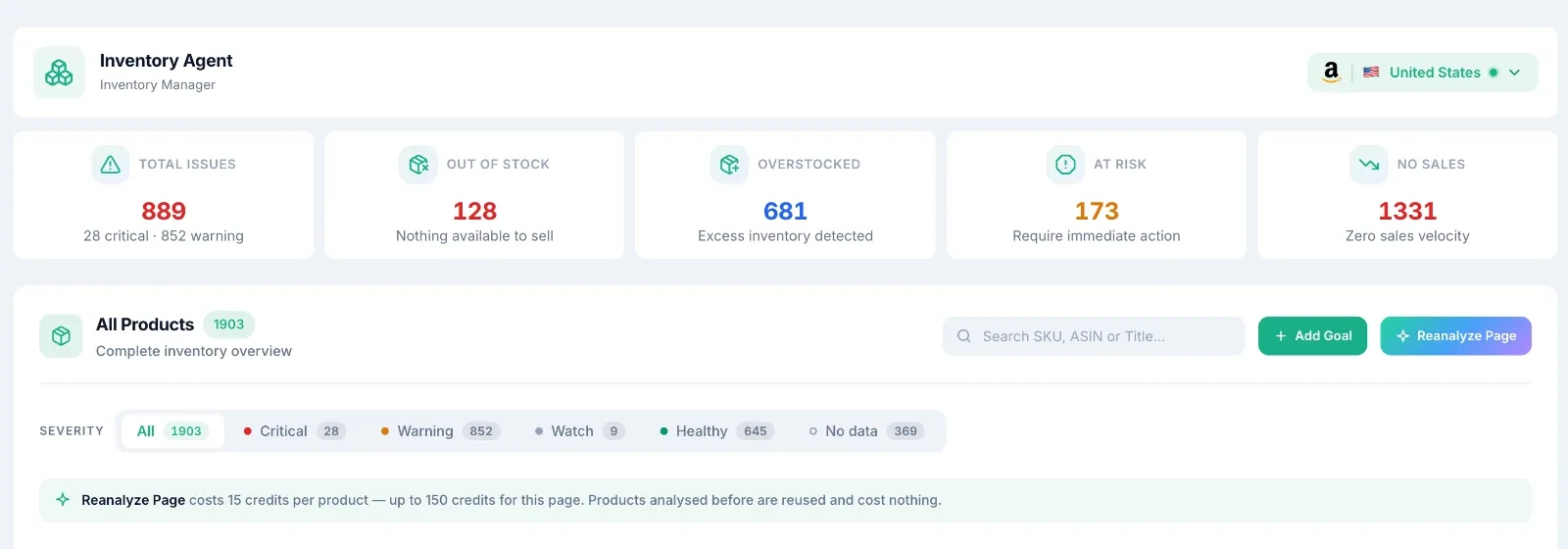
Inventory agent
An AI inventory agent for Amazon brands that also sell on Walmart and Shopify: stockout alerts, draft POs and FBA shipment plans within rules you set.
Rules · AI model · Your approval
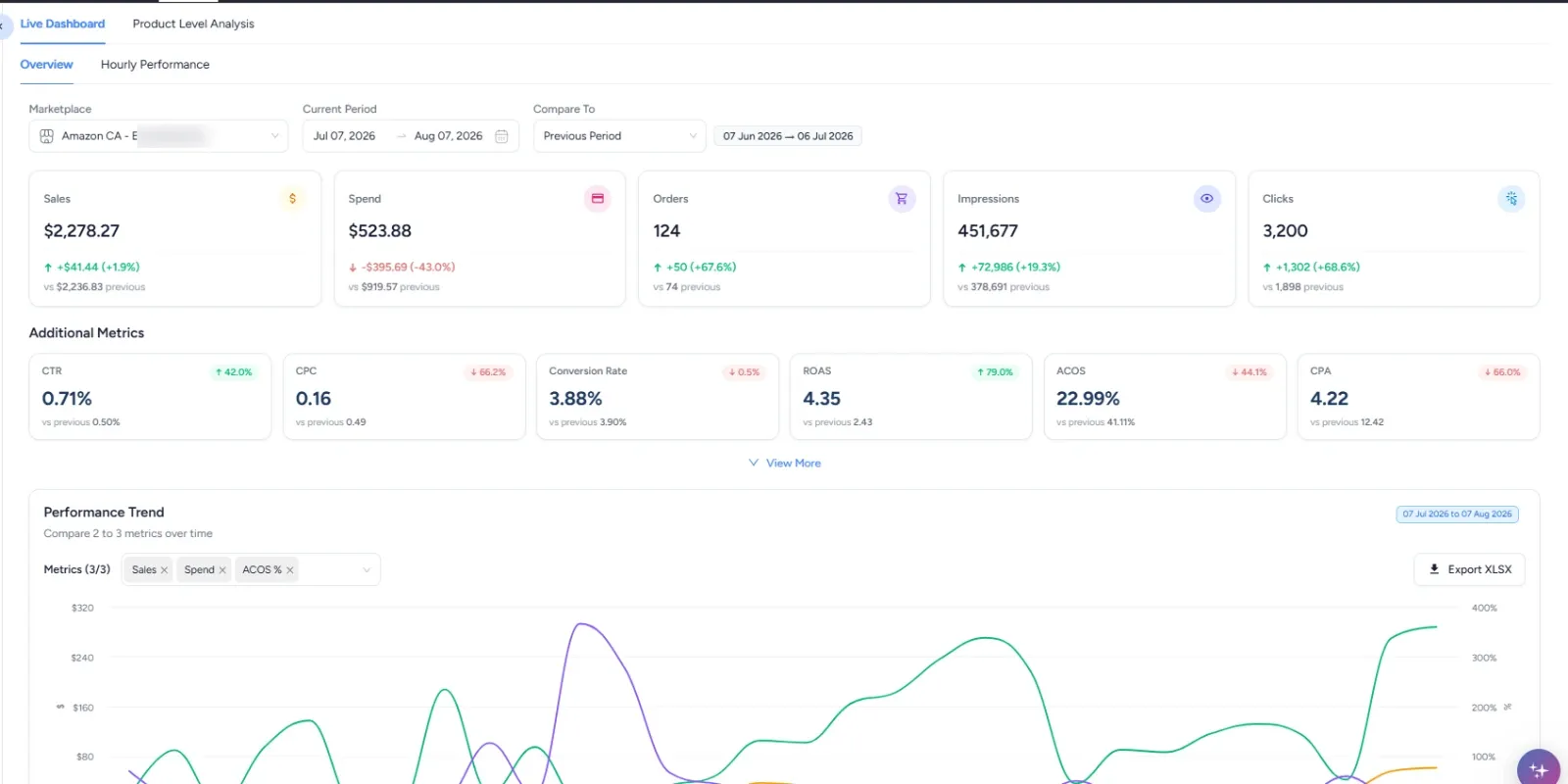
Advertising agent
How an AI agent for Amazon PPC sets bids from each SKU's margin after fees and days of cover, on your own ad accounts, with budget changes sent for approval.
Rules · AI model · Your approval
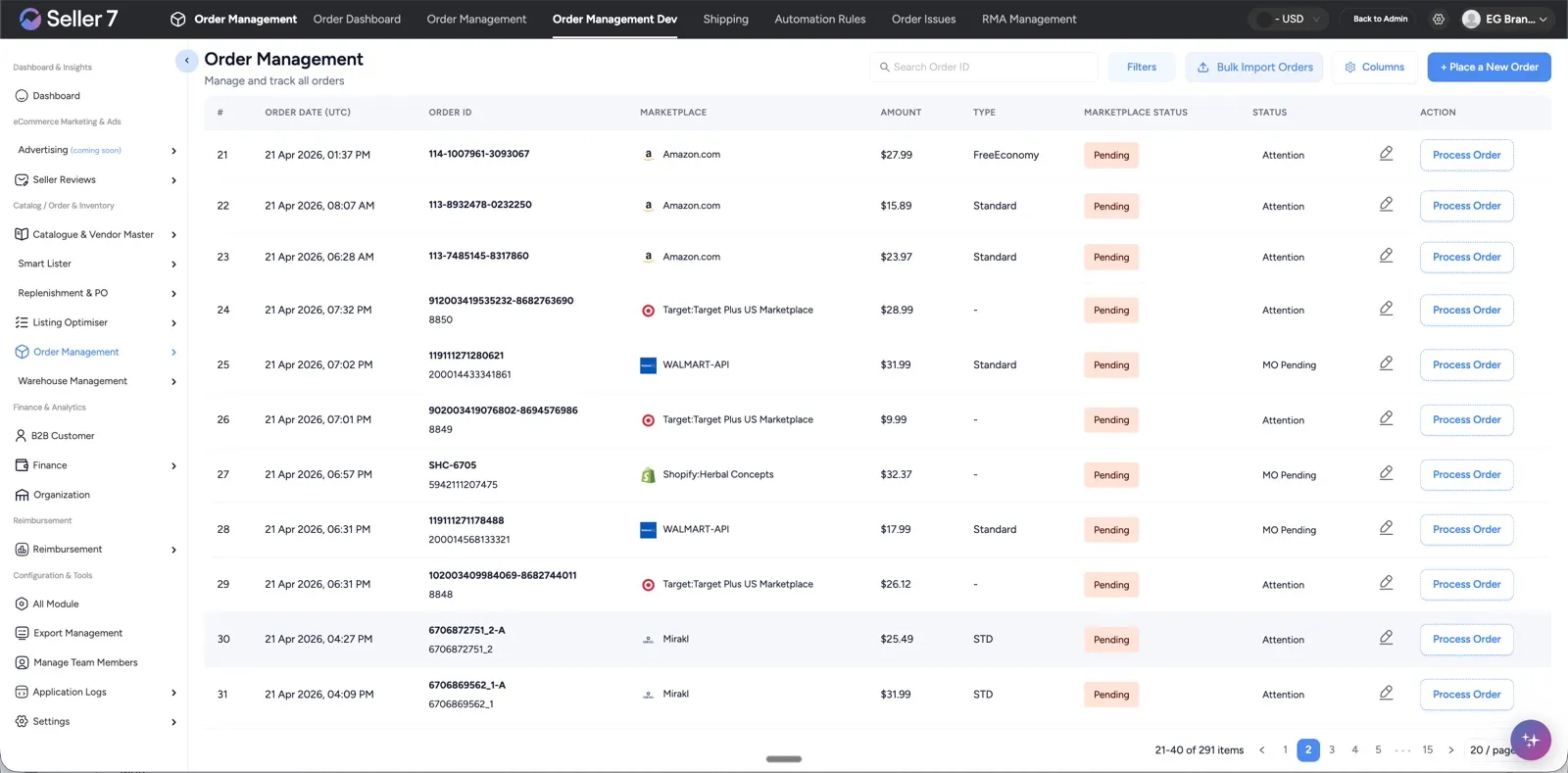
Multichannel operations agent
An AI agent for Walmart and TikTok Shop sellers that syncs stock with Amazon, routes each order to MCF, WFS or a 3PL and sends exceptions to your team.
Rules · AI model · Your approval
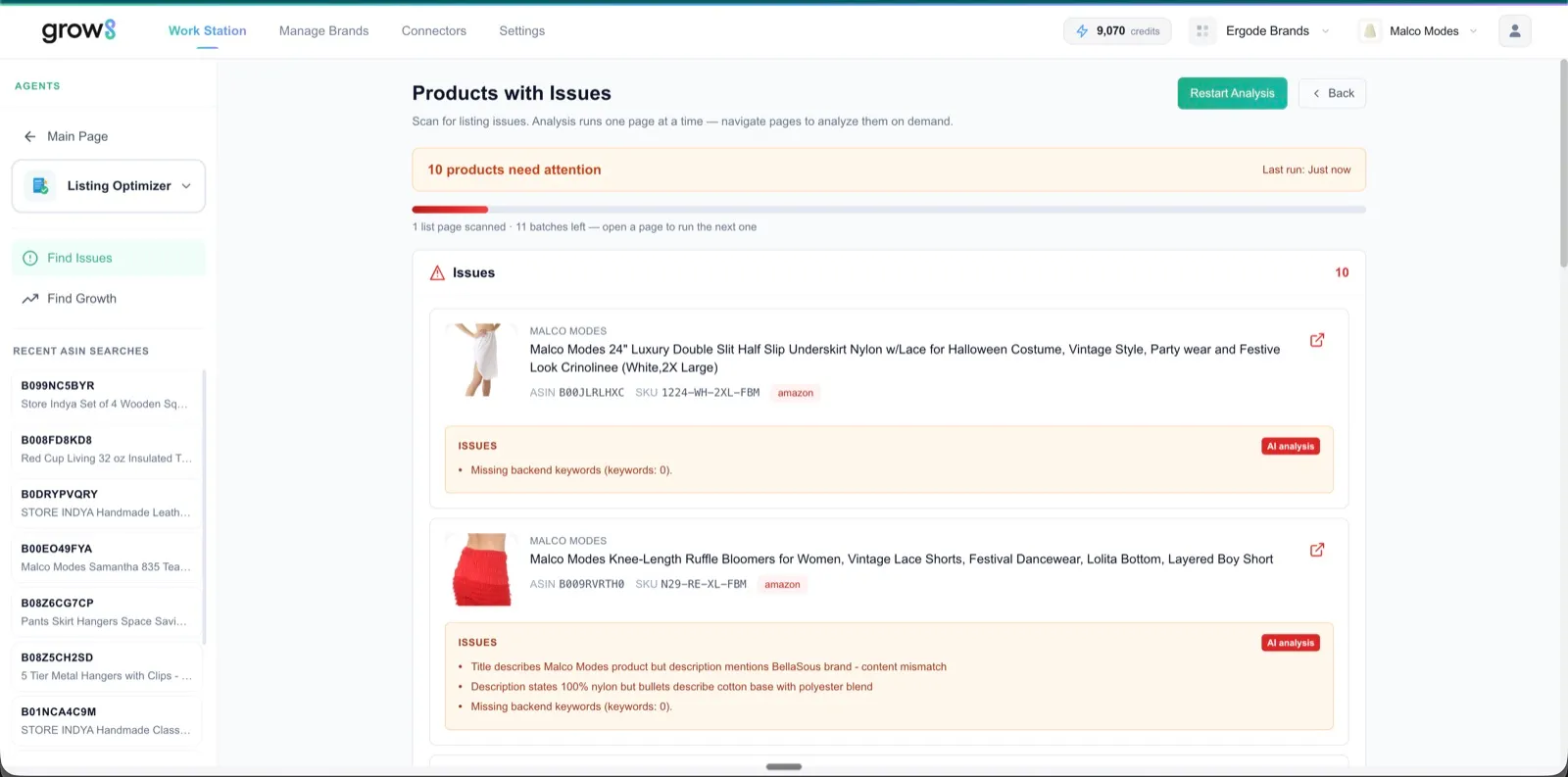
Listing and catalog agent
Multichannel catalog management automation: one master record, per-channel rules for Amazon, Walmart, TikTok Shop and eBay, and approval before publishing.
Rules · AI model · Your approval
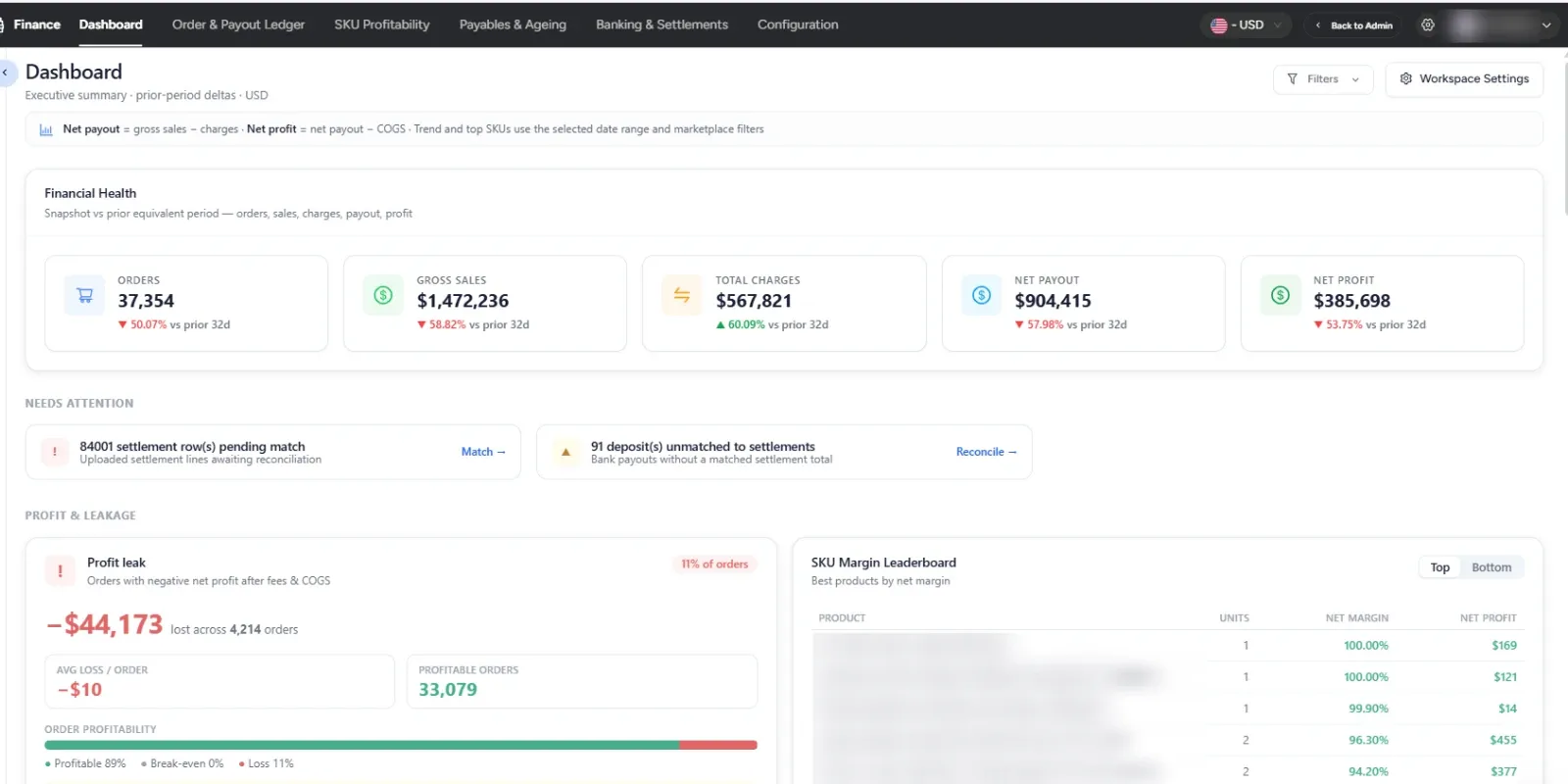
Finance and recovery agent
An FBA reimbursement and fee audit agent on your own Amazon account: finds lost units and fee overcharges, preps claims your team files, reconciles payouts.
Rules · AI model · Your approval
Account health agent
Amazon account health monitoring automation that flags rating drops, suppressed listings, hijackers, stranded stock and Buy Box losses, then drafts each fix.
Rules · AI model · Your approval
The agent register
| Agent | What starts it | What it does within your rules | What comes back to your team | Rules and model steps |
|---|---|---|---|---|
| Inventory and replenishment agent | A daily run after the overnight inventory and sales sync, plus an extra run when a SKU's days of cover crosses its threshold or a supplier date or inbound status changes. |
|
| 6 rule steps · 4 model steps |
| Advertising agent | A daily run once Amazon Ads reports land, an hourly check on Amazon Marketing Stream data, and any stock, cost or fee change that moves a SKU across a threshold you set. |
|
| 6 rule steps · 4 model steps |
| Multichannel operations agent | A new or changed order on any connected channel, a stock change at any fulfillment node, and a scheduled check ahead of each channel's ship-by cutoff. |
|
| 6 rule steps · 5 model steps |
| Listing and catalog agent | A new or changed product in your master record, a scheduled drift check of every live listing, and any listing issue, suppression or failed review a marketplace reports. |
|
| 6 rule steps · 6 model steps |
| Finance and recovery agent | A daily run after Amazon's ledger, reimbursement and returns reports refresh, a run when a new settlement report posts, and a run when a held case reaches its claim window. |
|
| 7 rule steps · 5 model steps |
| Account health agent | Amazon's notifications as they arrive (account status, listing issues, offer and Buy Box changes, pricing health), plus scheduled requests for the seller performance, suppressed listings, stranded inventory, feedback, and sales and traffic reports. |
|
| 8 rule steps · 5 model steps |
Which operations can AI agents run today, and which need a person?
Agents are good at work that repeats and follows your rules: checking days of cover every morning, drafting a purchase order when a SKU reaches its reorder point, flagging ads that keep spending on a product about to run out, or catching a listing that changed without anyone noticing. Decisions that commit money or speak for your brand stay with a person. For a task-by-task view of what to hand to Amazon's own tools, to API rules or to an agent, see how to automate Amazon operations. Purchase orders, budget changes, reimbursement claims, appeals and replies to customers come back to your team with the evidence and a proposed next step.
Which steps use rules, and which use an AI model?
Most of an operations agent is plain rules: thresholds, schedules, approval limits and the checks that stop an action. A model is used where fixed rules break down, for example forecasting demand from noisy sales history, reading a supplier email or drafting the note that explains a proposed order. Every agent page lists its rule steps and its model steps separately. Software that runs on rules alone is rule-based automation, and we call it that.
Who owns the agents, the code and the data?
The agents run on your own seller, ad and marketplace accounts, not on ours, and they read data through the official APIs you authorize, such as Amazon's Selling Partner API. You keep your accounts, your data and the custom code we build; the Growth OS base is licensed to you. We never buy your inventory or sell under our own accounts.
How are the agents designed to follow Amazon's Agent Policy?
Amazon's Agent Policy sets rules for software that acts inside a seller's account. We design each agent to follow it: the agent works through Amazon's APIs on accounts you authorize, acts only within the rules you approve, and leaves anything outside those rules to a person on your team. Our guide to Amazon's Agent Policy explains the rules themselves.
How is a custom agent different from an AI feature in a SaaS tool?
A SaaS agent runs on the vendor's platform, with the vendor's rules and the data that platform holds. A custom agent runs on your accounts, can read every channel and system you connect, such as Walmart, Shopify, your 3PL and your ERP, and follows the rules you set. If you are weighing the two, our comparison of a SaaS tool stack and an owned system lays out the trade-offs. Shopping assistants that recommend products to buyers are a different kind of agent, covered under agentic commerce.
How does an engagement start?
Start with the free 24-hour diagnostic of your Amazon account, or schedule a call. We map the operations gaps first, then scope the agents that close them on top of Ecomsellertool Growth OS, in an architecture doc with a fixed price and go-live date. Our team has built on Amazon's seller APIs since 2017, and the software behind these agents comes from systems we have built for clients such as Amazify.
Frequently asked questions
Can AI agents manage Amazon Seller Central on their own?
Not entirely, and we do not build them to. An agent can monitor your accounts, prepare drafts and run routine actions within the rules you approve. Purchase orders, budget changes, reimbursement claims, appeals and customer replies come back to a person on your team with the evidence and a proposed next step.
What does it take to deploy an agent on our accounts?
Access to the accounts and systems the agent needs, authorized through their official APIs, and a few hours with the people who make the decisions today, so the rules match how you work. Each agent is scoped in an architecture doc with a fixed price and go-live date before work starts.
Who owns an agent after it is built?
You keep your accounts, your data and the custom code we build; the Growth OS base is licensed to you. The agent runs on your accounts, not ours.
Is a rule-based automation an AI agent?
No. Software that only follows fixed rules is rule-based automation, and we describe it that way. We call something an agent only when part of its work uses an AI model, and every agent page lists which steps are rules and which use a model.

See what an agent would do on your own accounts.
Enter your email, connect your Amazon account with Login with Amazon, on Amazon’s own consent screen (we only read data; we never change listings, prices, stock or ads), and get a free report of what is going wrong within 24 hours of connecting, on business days. Prefer to talk it through? Schedule a call with the team that built these systems.
Free · 30 minutes · Pick any open slot